
Precision Orifices
Precisely formed flow passages for repeatable gas or liquid restriction in compact systems.
View Component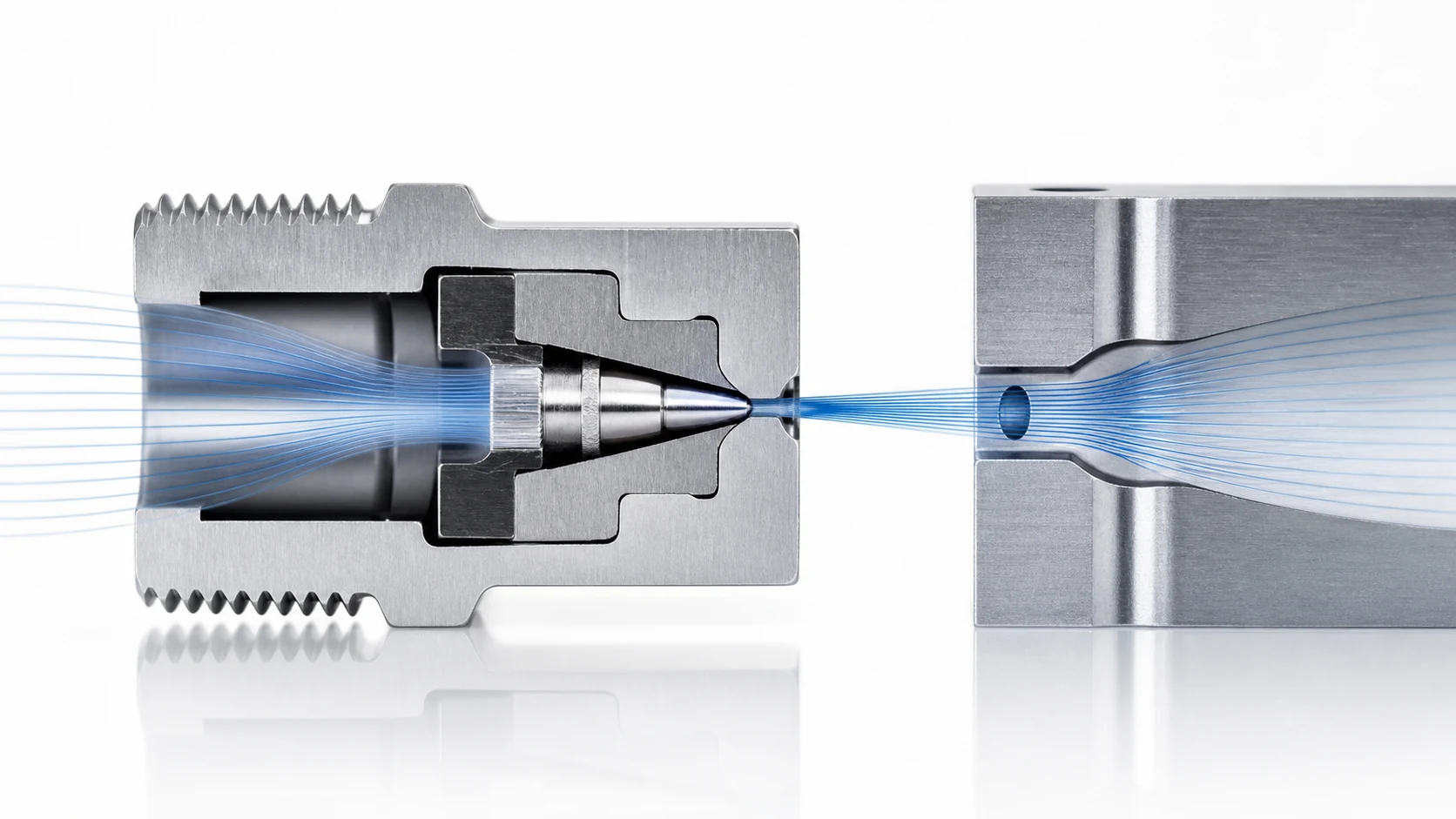
Low-flow design support balancing restriction, stability, contamination resistance, and manufacturability.
A very small target flow can push passage geometry toward contamination sensitivity or make performance highly dependent on pressure and media properties.
A nominal part description is not enough. Share the media, pressures, temperature, target behavior, envelope, connections, and quantity.
HENGTROL evaluates precision apertures, longer restrictive paths, porous elements, and protective screening to identify the most practical architecture.
The final format is selected only after application review.
Precisely formed flow passages for repeatable gas or liquid restriction in compact systems.
View ComponentCompact restriction components engineered for stable pressure drop and controlled system response.
View ComponentPorous metal elements for distributed restriction, diffusion, damping, and filtration functions.
View ComponentConfirm this variable during project evaluation.
Confirm this variable during project evaluation.
Confirm this variable during project evaluation.
Confirm this variable during project evaluation.
Confirm this variable during project evaluation.
Confirm this variable during project evaluation.
Example context for engineering evaluation; final suitability depends on confirmed requirements.
Example context for engineering evaluation; final suitability depends on confirmed requirements.
Example context for engineering evaluation; final suitability depends on confirmed requirements.
Custom geometry, materials, interfaces, combined functions, prototype quantities, and repeat production can be evaluated around your equipment.
Decision support
Use this route to translate the low flow regulation problem into a component path, test plan, and manufacturable interface.
Low flow, pressure instability, backflow, contamination, and space limits need different paths.
Restriction, check, screen, porous, fitting, and custom functions can be combined as needed.
Prototype review and inspection criteria should be agreed before repeat production.
The inquiry should include enough operating context for fast technical routing.
| Decision area | Information to prepare | Why it matters |
|---|---|---|
| System behavior | Low flow, backflow, pressure decay, damping, filtration | Defines the engineering problem before selecting a part. |
| Operating window | Inlet pressure, outlet pressure, temperature, duty cycle | Clarifies whether stability or protection is the first priority. |
| Component path | Orifice, restrictor, porous element, check valve, screen, custom assembly | Routes the solution to a manufacturable architecture. |
| Risk review | Leakage, clogging, contamination, assembly direction, space limits | Catches field risks before specification freeze. |
Challenge and solution
The page now explains the risk, the decision route, and the evidence a buyer needs before contacting the engineering team.
Wrong component choice can create flow drift, clogging, leakage, or late redesign.
Review application conditions, component geometry, material choice, and inspection expectations together.
Factory capability, quality control, and repeat supply support are made visible before the inquiry.
Send the known conditions and let engineering route the request to the right product or custom path.

CNC machining and controlled finishing help keep small flow paths consistent.
Laser welding and assembly review support compact OEM components where geometry matters.
Inspection points and documentation can be aligned to the buyer’s application and supply requirements.
FAQ
Use these questions to prepare a faster product, solution, or application review.
Media, target flow, pressure window, temperature, envelope, connection style, drawing or sample, and expected quantity.
Yes. The fastest path is often to compare a standard product family against the modifications required by the application.
Inspection points, material expectations, test criteria, and documentation needs should be confirmed before repeat supply.
Send the application, media, target flow, pressures, temperature, materials, dimensions, connection type, drawing or sample, and expected quantity.