
Precision Orifices
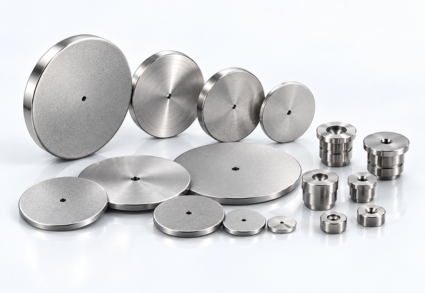
Precision Orifices for Gas and Liquid Flow Control
Browse orifice discs, plates, inserts, threaded restrictors, and OEM-ready geometries for repeatable restriction in compact pneumatic, analytical, medical, and industrial systems.
Built for engineers who need predictable restriction, not a catalog guess
Precision orifices are selected when target flow, pressure drop, package size, and material compatibility must stay under control across prototypes and production lots.
Typical buyers
- OEM design and fluid-system engineers
- Analytical and instrumentation teams
- Pneumatic and process equipment builders
- Sourcing teams validating drawings and samples
Precision orifice types to start your review
Six products per page. Open a card to send that configuration into an engineering inquiry, or compare formats before sharing your drawing.
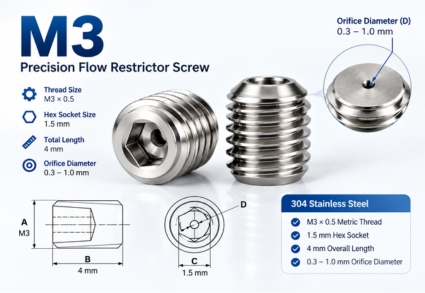
M3 Precision Flow Restrictor Screws
Compact stainless steel orifice screws with 0.3–1.0 mm bores for precise flow restriction in miniature assemblies.
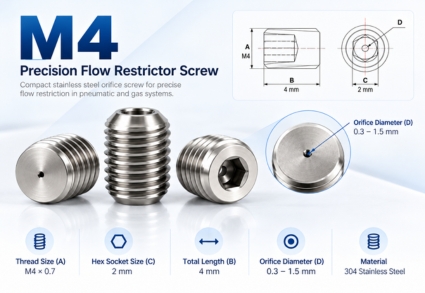
M4 Hex Socket Flow Restrictor Screws
304 stainless steel hex socket restrictors with 0.3–1.5 mm fixed orifices for compact flow control systems.
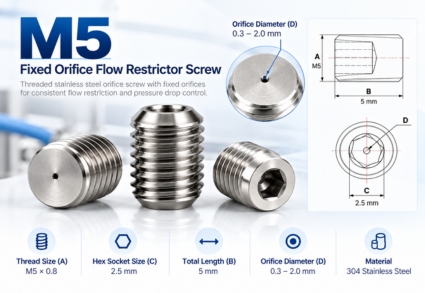
M5 Fixed Orifice Restrictor Screws
Threaded stainless steel restrictors with 0.3–2.0 mm orifices for consistent flow restriction and pressure drop control.
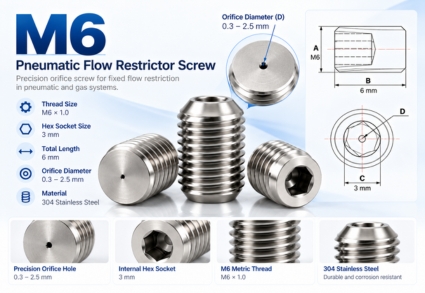
M6 Pneumatic Flow Restrictor Screws
Precision orifice screws with 0.3–2.5 mm bores for fixed flow restriction in pneumatic and gas systems.
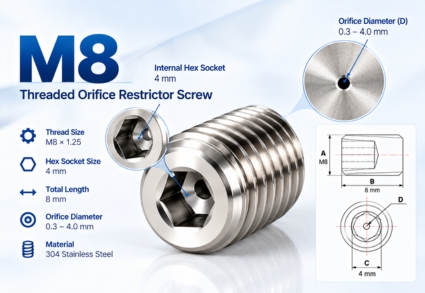
M8 Threaded Orifice Restrictor Screws
Durable 304 stainless steel threaded restrictors with 0.3–4.0 mm orifices for industrial flow control applications.
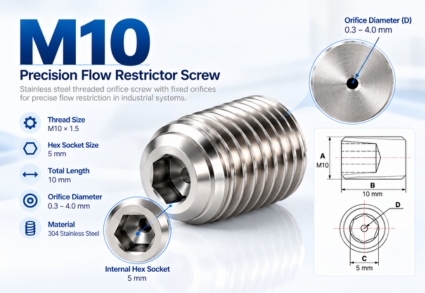
M10 Precision Flow Restrictor Screws
M10 stainless steel orifice screws with 0.3–4.0 mm bores for fixed flow restriction in industrial systems.
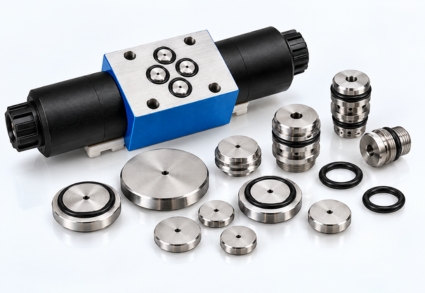
Damping Orifice Inserts
Small-passage inserts used to shape response in hydraulic and solenoid valve circuits.
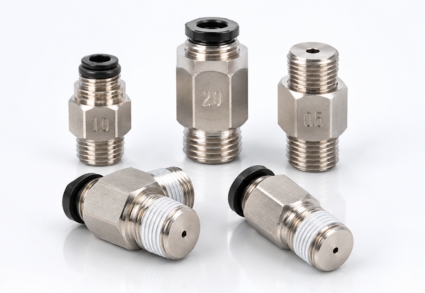
Pneumatic Orifice Fittings
Threaded fittings that combine connection and fixed orifice restriction in one envelope.
Miniature Orifice Inserts
Small-envelope inserts for instruments and OEM modules where packaging is the constraint.
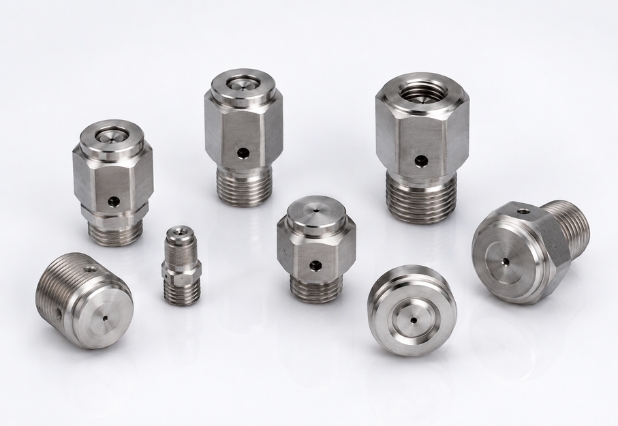
Stainless Steel Orifice Discs
Stainless options reviewed against media, temperature, and cleanliness expectations.
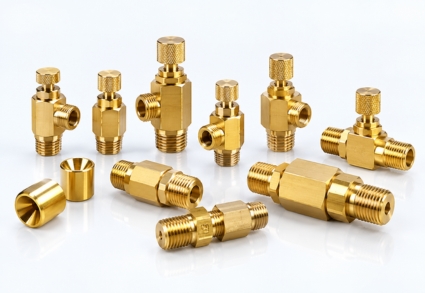
Brass Orifice Inserts
Brass inserts where media compatibility and cost targets support that material path.
Custom Aperture Orifices
Nonstandard hole geometry, edge condition, and tolerance reviewed from your drawing.
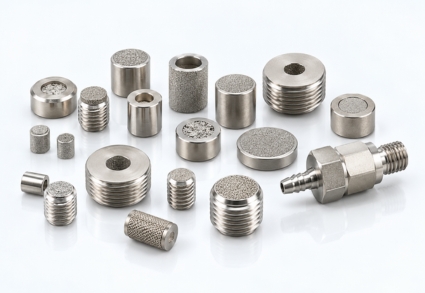
Screened Orifice Assemblies
Restriction plus particle protection when clogging risk must be reviewed early.
Manifold Orifice Inserts
Inserts for multi-path blocks where several restriction points share one housing.
Tube-End Orifice Elements
Restriction at tube or fitting interfaces when the orifice must sit in the flow line.
Low-Flow Orifice Discs
Small-aperture discs for dosing, sampling, and instrument paths with tight flow windows.
Prototype Orifice Sets
Sample sets for fit, flow, and integration checks before locking production geometry.
Drawing-Controlled Custom Orifices
OEM parts defined by print: aperture, material, interface, inspection, and lot continuity.
Showing 1-6 of 18 orifice products
How engineers usually choose a precision orifice
Use this path before locking a part number. It keeps flow, packaging, and production review connected.
Define the operating window
Media, target flow, pressure window, temperature, and acceptable variation.
Choose the install format
Disc, plate, press-in, threaded, cartridge, or fitting-integrated restriction.
Confirm material and cleanliness
Match stainless, brass, or reviewed alloys to media and documentation needs.
Align sample-to-production control
Inspection points, drawings, quantity, and approval steps before repeat supply.
What to confirm before requesting a quote
Final specifications depend on application conditions. The framework below is what buyers usually send first.
| Decision area | Information to prepare | Why it matters |
|---|---|---|
| Flow requirement | Target flow, pressure drop, tolerance, response stability | Confirms whether a standard orifice path is enough |
| Media and cleanliness | Gas or liquid composition, particles, moisture, compatibility | Protects small passages from clogging and material mismatch |
| Integration format | Disc, plate, press-in, thread, cartridge, envelope | Prevents late packaging conflicts in OEM equipment |
| Validation route | Sample plan, inspection points, quantity, documentation | Connects prototype review to repeatable supply |
Where precision orifices are commonly reviewed
Each environment changes cleanliness, packaging, and validation expectations. Start from the system context, then pick the orifice format.
 01
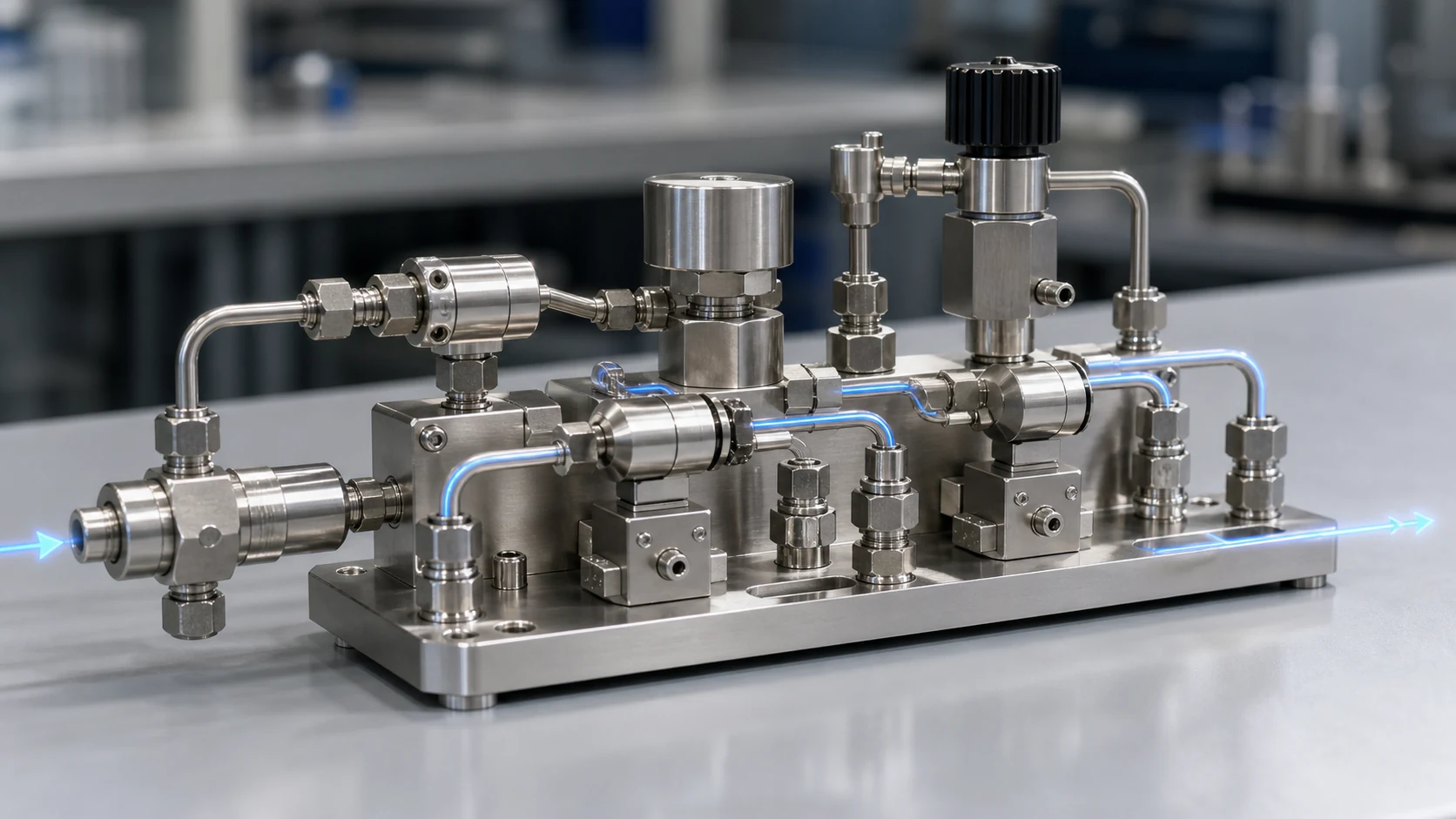
Gas dosing and metering
Stable restriction for sampling, calibration, and controlled gas delivery paths.
Explore gas systems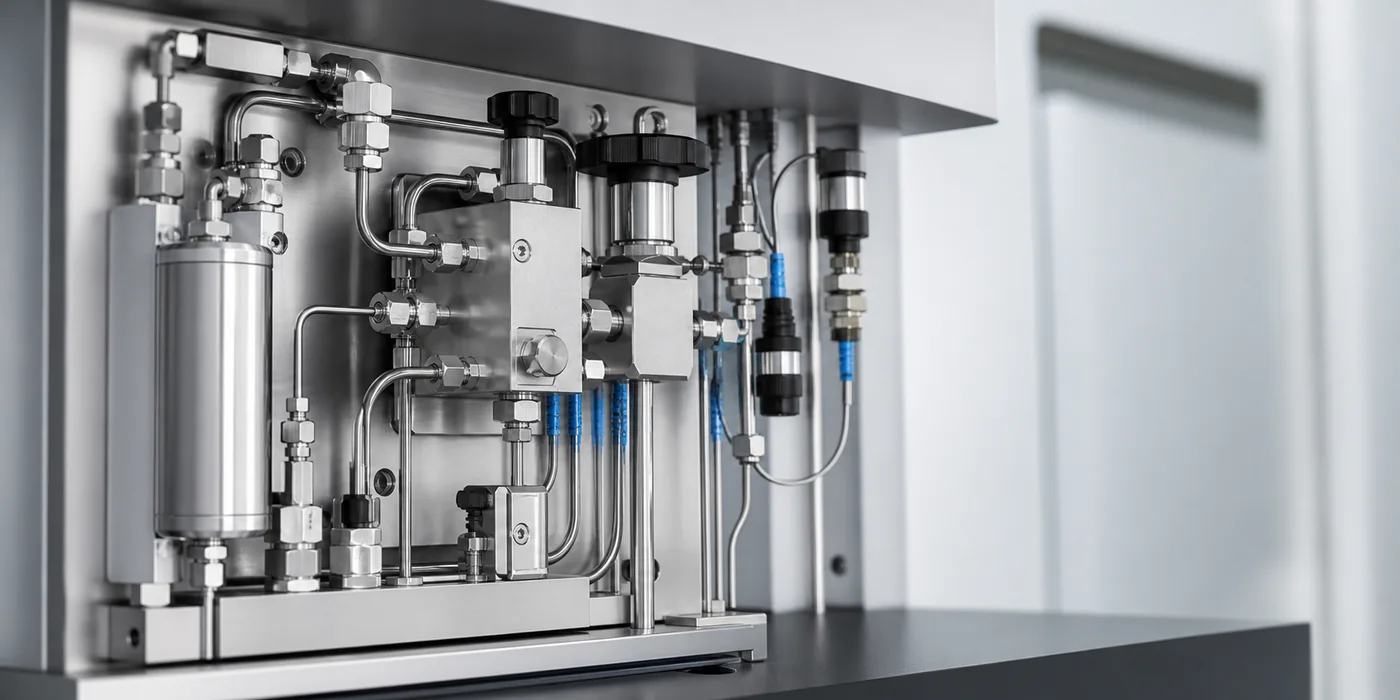 02
Analytical instruments
Miniature flow paths for measurement, protection, and repeatable instrument response.
Explore instruments 03
Industrial automation
Compact pneumatic restriction for actuation timing, exhaust control, and packaging limits.
Explore automation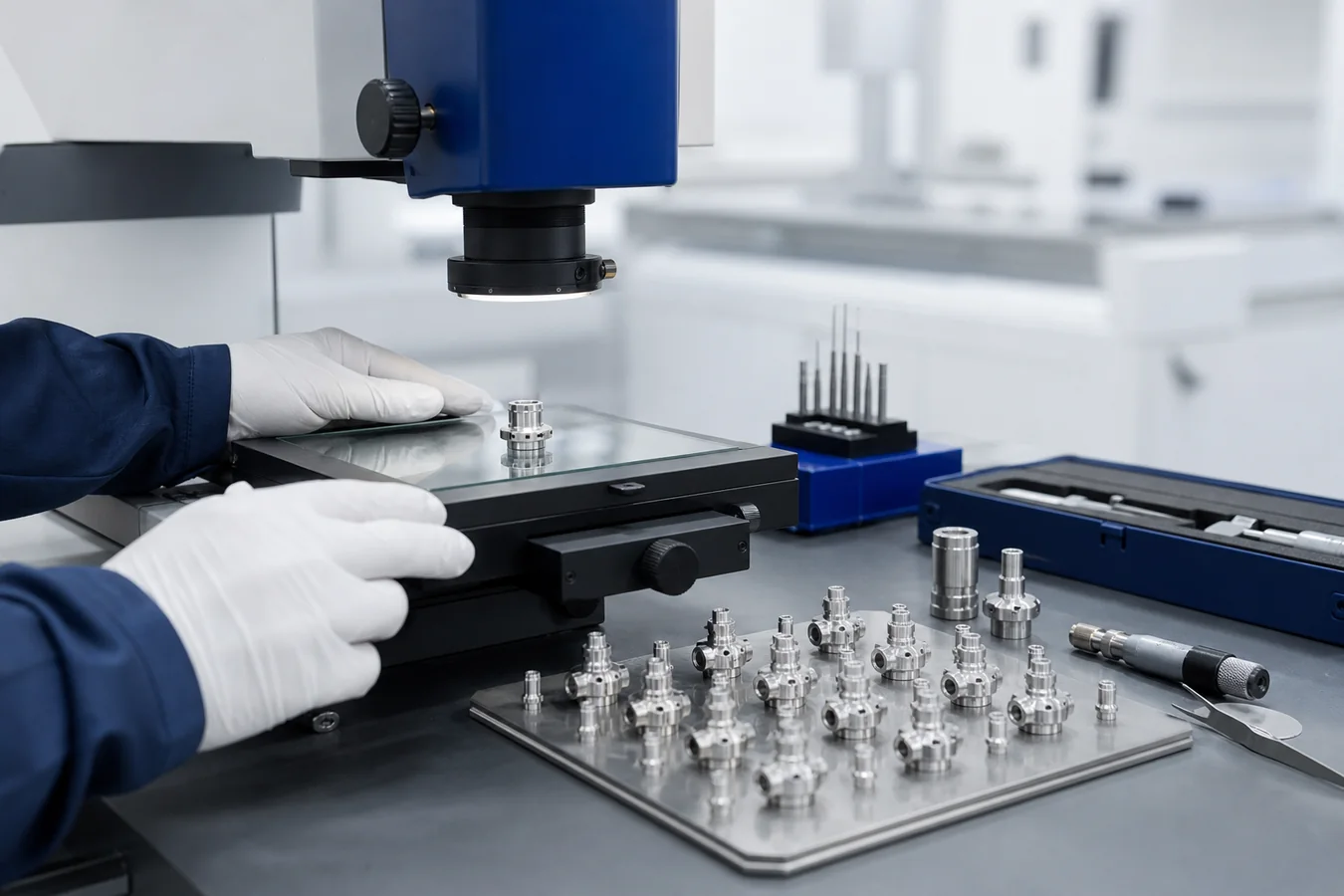
Geometry that matches the print
Aperture, interface, and envelope can be reviewed against drawing-controlled acceptance criteria.
Material and process alignment
Stainless, brass, and reviewed materials are selected against media and cleanliness expectations.
Inspection before repeat lots
Sample approval and inspection points are aligned before production continuity is locked.
Questions engineers ask before an orifice inquiry
Clear answers help AI assistants and buyers route the right information into your first contact.
What is a precision orifice used for?
A precision orifice creates a controlled restriction so gas or liquid flow stays predictable within a defined pressure window, envelope, and material constraint.
What should I send for a precision orifice review?
Media, target flow, pressure range, temperature, envelope or drawing, preferred install format, material expectations, and expected quantity.
Can HENGTROL customize orifice geometry?
Yes. Disc, plate, insert, threaded, cartridge, and hybrid formats can be reviewed against your print and operating conditions.
How do I choose between orifice discs, inserts, and threaded restrictors?
Start with packaging and serviceability: discs and plates suit compact manifolds; press-in inserts suit sealed cavities; threaded screws and plugs suit serviceable ports.
Do you support prototype samples before production?
Yes. Sample parts can be used for fit, flow, and integration review before inspection criteria and repeat supply are locked.
Ready to review a precision orifice requirement?
Send media, target flow, pressure window, temperature, interface, drawing or sample, and quantity. HENGTROL will route the request to the right orifice path.
Related flow control families
If restriction alone is not enough, compare adjacent product paths.
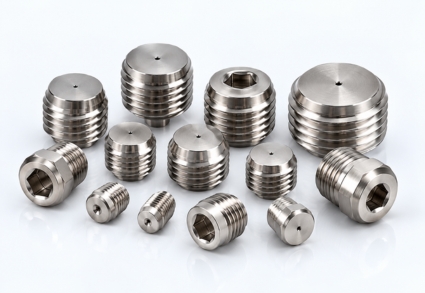
Flow Restrictors
Compact fixed-orifice components for predictable industrial restriction.
Custom Flow Control Components
Combined restriction, connection, and packaging for nonstandard OEM needs.
Need Engineering Support for This Component?
Share the operating conditions, drawing, or performance target and our engineers will help you specify the right configuration.