
How to Select a Precision Orifice for Gas Flow Control
A practical framework for defining media, pressure, temperature, target flow, and tolerance before selecting an orifice.
Read ArticleSystem-level examples and design questions for critical industrial equipment.
A practical framework for defining media, pressure, temperature, target flow, and tolerance before selecting an orifice.
Read ArticleUnderstand the functional and integration differences between a standalone orifice and a housed flow restrictor.
Read ArticleCracking behavior, leakage criteria, materials, orientation, and packaging all shape a miniature check valve design.
Read ArticleA system-level look at restriction, tubing, fittings, and transient response in tightly packaged pneumatic equipment.
Read ArticleUse these questions to frame material, seal, cleanliness, temperature, and documentation requirements.
Read ArticleHow drawing control, validation criteria, inspection planning, and communication support a reliable production transfer.
Read ArticleDecision support
This resource page now gives readers a clearer route from learning to selection, validation, and engineering contact.
Make each resource answer a practical engineering or sourcing question.
Link learning content back to product families and application routes.
Use process, inspection, and manufacturing evidence where appropriate.
Help readers submit conditions instead of guessing the right component alone.
| Decision area | Information to prepare | Why it matters |
|---|---|---|
| Visitor intent | Choose product, solve application issue, confirm capability, contact engineering | Routes each visitor to the next useful step. |
| Evidence need | Factory capability, quality control, materials, examples, technical files | Builds trust before asking for an inquiry. |
| Decision support | Matrices, FAQs, process explanations, resource links | Reduces uncertainty for engineers and sourcing teams. |
| Conversion path | Quote request, product review, custom project discussion | Keeps the page tied to a business outcome. |
Challenge and solution
The page now explains the risk, the decision route, and the evidence a buyer needs before contacting the engineering team.
Wrong component choice can create flow drift, clogging, leakage, or late redesign.
Review application conditions, component geometry, material choice, and inspection expectations together.
Factory capability, quality control, and repeat supply support are made visible before the inquiry.
Send the known conditions and let engineering route the request to the right product or custom path.
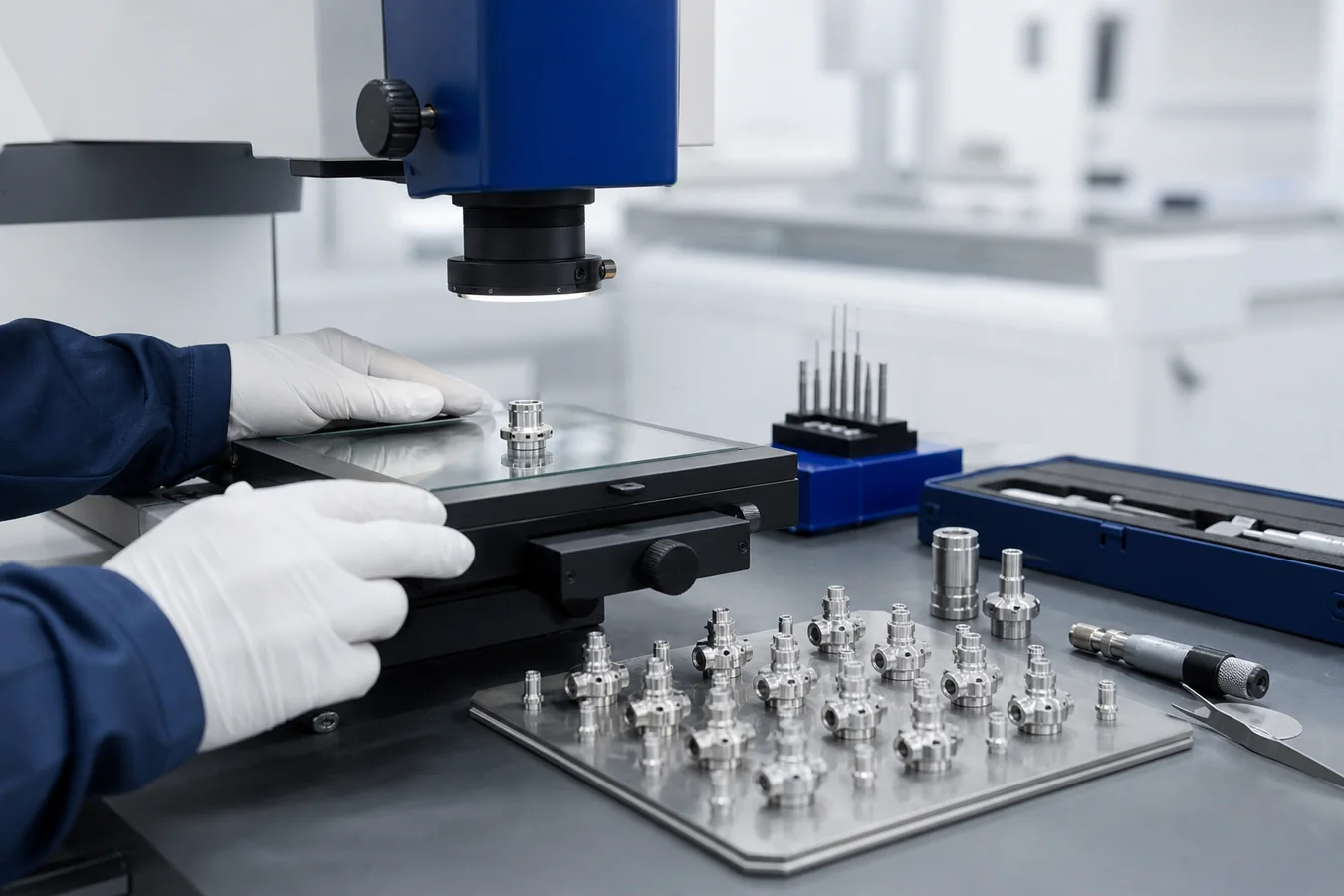
CNC machining and controlled finishing help keep small flow paths consistent.
Laser welding and assembly review support compact OEM components where geometry matters.
Inspection points and documentation can be aligned to the buyer’s application and supply requirements.
FAQ
Use these questions to prepare a faster product, solution, or application review.
Media, target flow, pressure window, temperature, envelope, connection style, drawing or sample, and expected quantity.
Yes. The fastest path is often to compare a standard product family against the modifications required by the application.
Inspection points, material expectations, test criteria, and documentation needs should be confirmed before repeat supply.
Send the operating conditions and component requirement to HENGTROL engineering.